51Trips
2023
Connecting product and support to unlock full automation
Problem area
Why weren’t users buying the book?
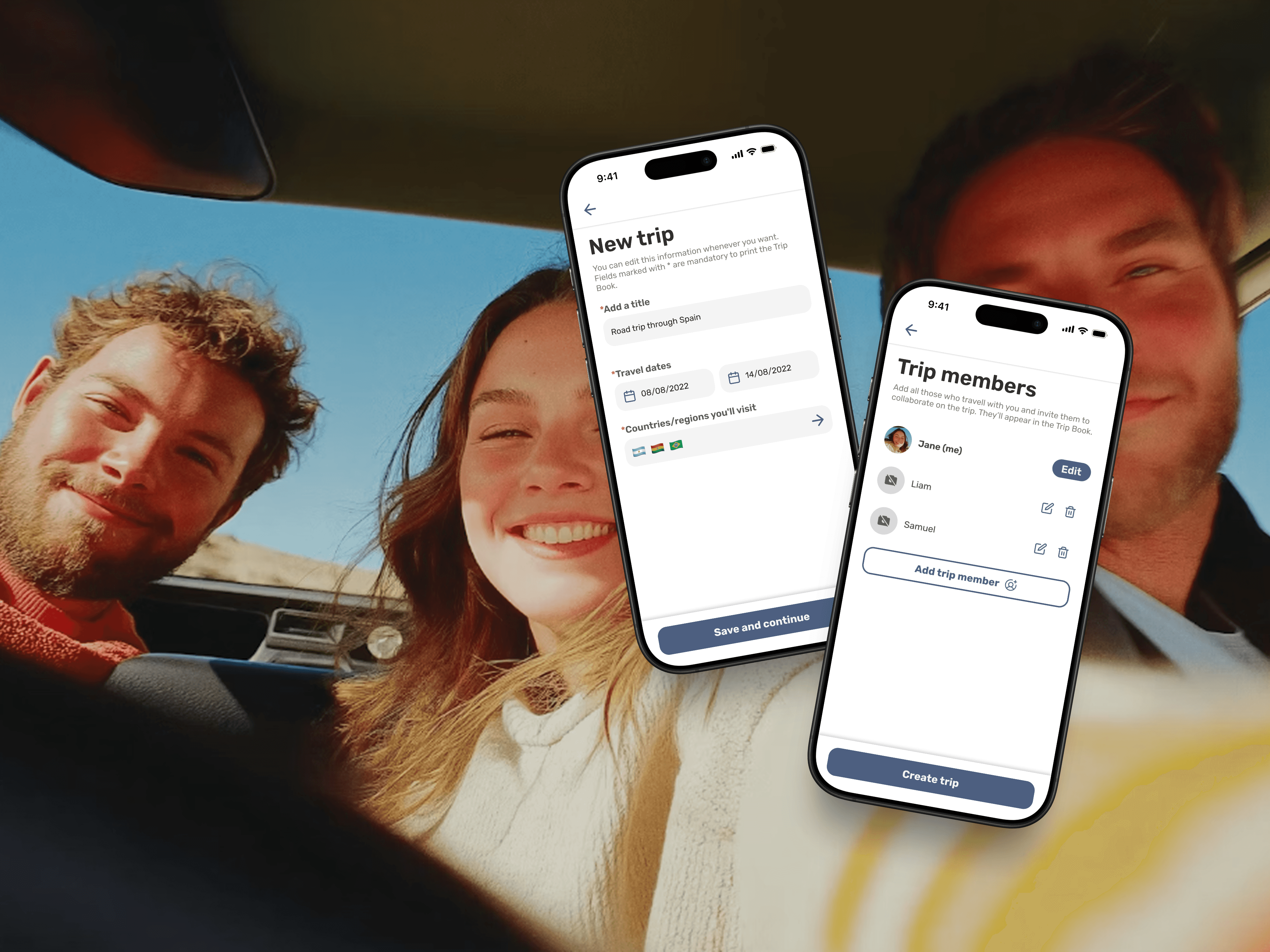
Users wanted to preserve travel memories with everyone on the trip: kids, grandparents, even pets. The app allowed adding trip members without accounts, but most users weren't doing it. When they previewed their tripbook, they saw incomplete albums. Some bought anyway and requested reprints. Others just didn't buy. Support tickets were piling up, but without budget for extensive research, we didn't know what to prioritize.
Overall picture

Her incorporation brought very interesting dynamics at the UX level, always with a strategic perspective and involving the entire team. She's a natural researcher, passionate about diving deep into any area. Creative, cheerful, and always willing to lend a hand. Without a doubt, a great colleague and professional.

Design decision 01
Support tickets held the answer
I had previously established an ongoing research system with the support team and the data revealed two problems. First, users forgot to add members who didn't have the app. Second, when they did add them, they forgot to assign photos. No reminders, no detection, no feedback. Albums looked incomplete and users didn't understand why. This meant manual review before printing, reprints, wasted materials, and more support tickets.
The root cause

Design decision 02
Learning from how others solved it
With the problem identified, I needed to explore how other platforms handled collaboration and member management. I analyzed screens, flows, components, and terminology from competitors and other apps where users share access or invite others. This helped me identify familiar patterns users already understood, reducing the learning curve and ensuring the solution felt intuitive.
Collaboration patterns

Design decision 03
Making the change visible for stakeholders
Once I had a solution direction, I needed to communicate the problem and the proposed change clearly to stakeholders. I created user flows, comparison tables, permission matrices, and before-and-after visuals to show how the new solution would work. Making the change visible helped stakeholders understand the impact and justified the investment of resources.
Getting everyone on the same page


Retrospective
Automation activated, tickets gone
The support team stopped handling reprint tickets. The operations team no longer reviewed every book before printing. Connecting product and support revealed a problem that product alone couldn't see. This was the first time I saw my work have a direct, measurable impact.
To measure success today, I would look at ticket volume for this issue, the cost of manual reviews and reprints, and the conversion rate from completed trips to tripbook purchases. With more time, I would have explored better ways to communicate the album preview so users feel confident before buying.

